SIERRA SIDE YARD
Six days, one CAT 299, twelve tons of granite
RESIDENTIAL · BOULDER RETAINING · DRAINAGE GRADE
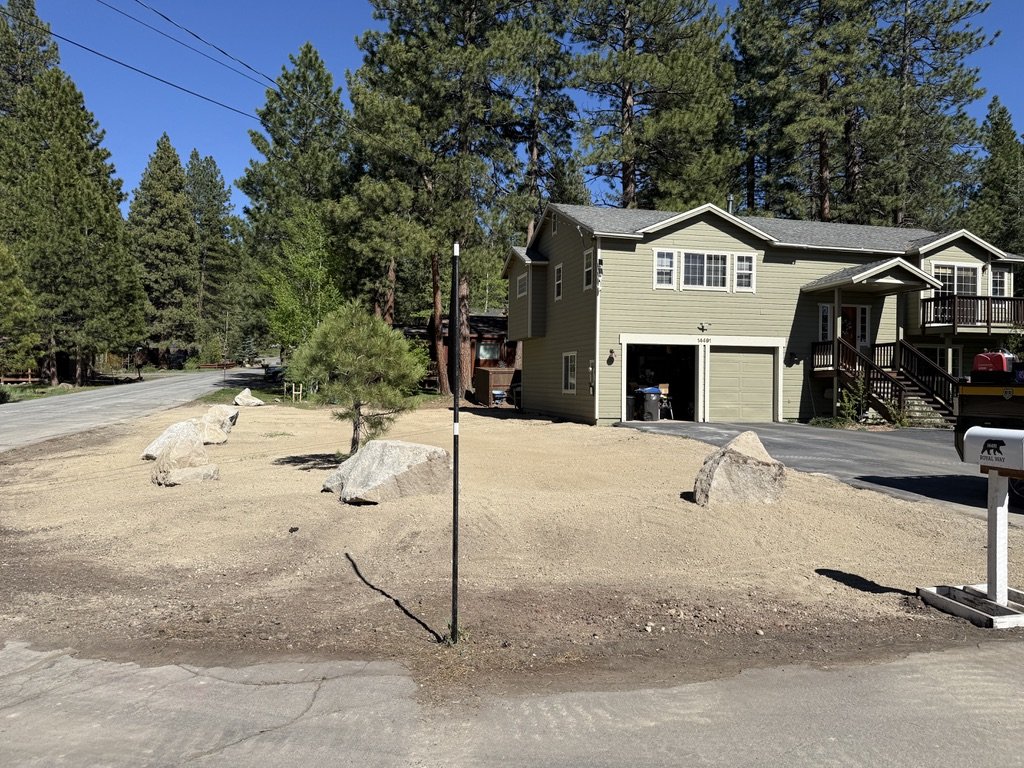
Six days, one CAT 299, twelve tons of granite
A forgotten side yard turned into a permanent Sierra-stone landscape feature
Sierra side yards have one job: shed water away from the foundation and look like they belong. This one was failing at both — a strip of unused dirt and gravel between the house and the property line that turned into mud in winter and dust in summer.
Six days with a CAT 299 XHP compact track loader, a 16-foot dump trailer, and twelve tons of Sierra granite boulders — set as a permanent retaining feature with drainage gravel underneath, finish-graded at 1.5% slope away from the house. The art is in the orientation: each boulder has one "face" that reads as the natural face. Get the face right and the wall looks like it's been there a hundred years. Get it wrong and it looks like a pile of rocks. This one got the faces right.
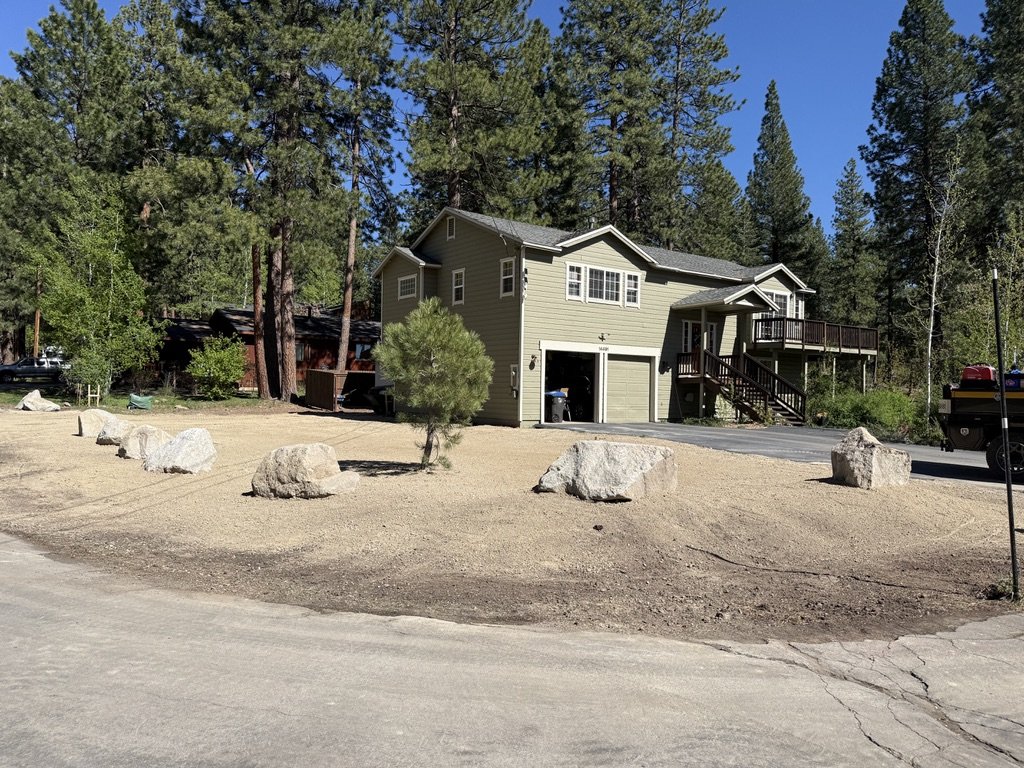
This is what E Kerr LLC + Ruppert Inc. do on a small residential job — the same machines, GPS grade-setting, and finish work that go into commercial sites, applied to a homeowner's side yard. The reveal photo on May 8 closed out the job.
The side yard as it was — strip of dirt and gravel between the house and the property line. Nothing was particularly wrong with it. Nothing was particularly right either. Sierra side yards turn into mud pits in winter and dust traps in summer if you don't claim them with a permanent feature. The plan: boulder retaining + drainage grading + path cutting. Six days. One CAT 299.
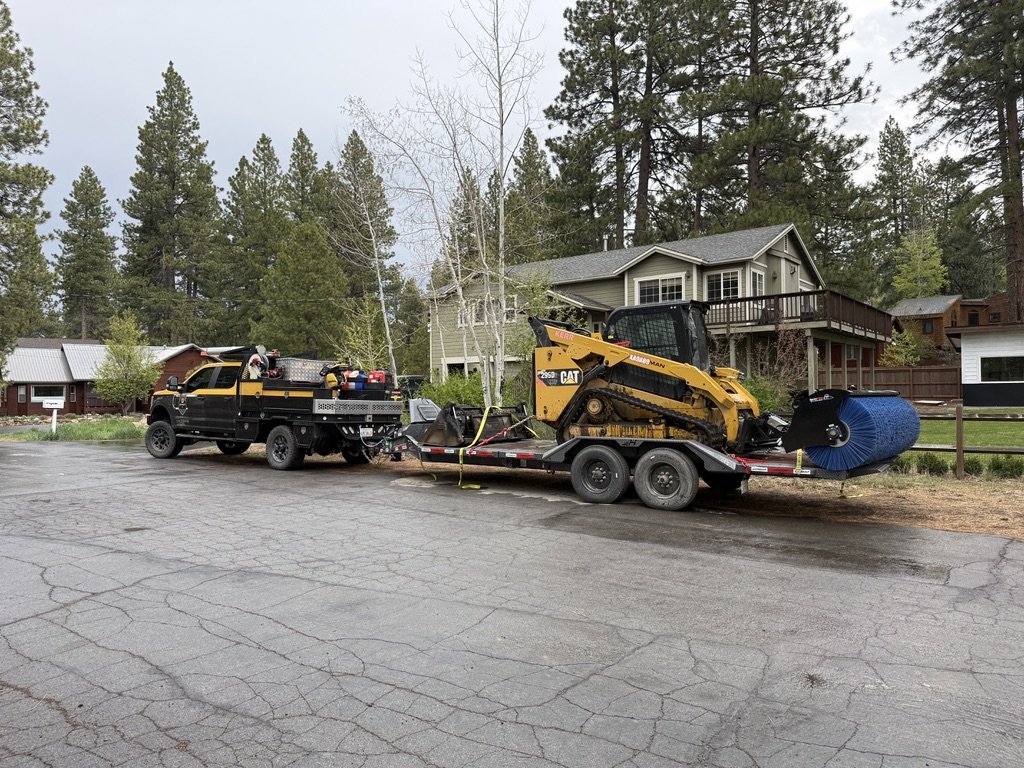
The CAT 299D XHP compact track loader rips into the existing grade. Existing fill comes out, subsoil gets compacted. A 16-foot dump trailer is the mobile spoil bin — fills and empties twice during this phase. The track loader's footprint compacts the subgrade as it works, which is the half of the job most people skip.
Excavation depth: ~16 inches below finish grade to allow for #57 drainage stone + bedding sand under the boulders. The deeper you go on the bedding, the better the boulders settle without shifting in the freeze/thaw cycle.
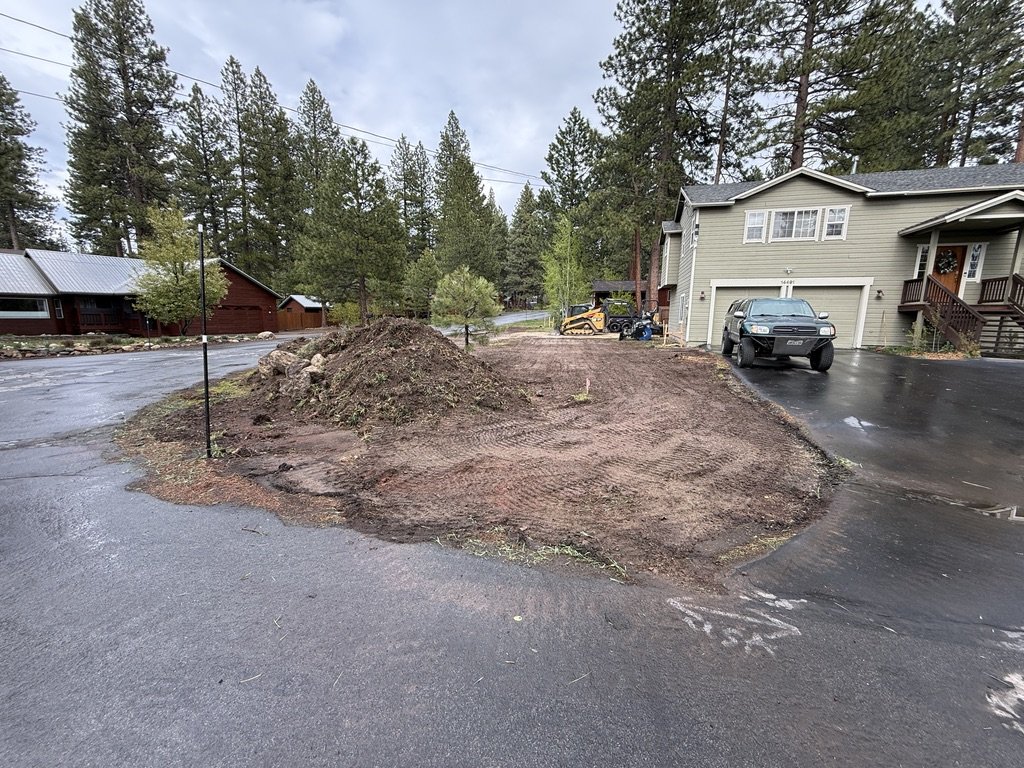
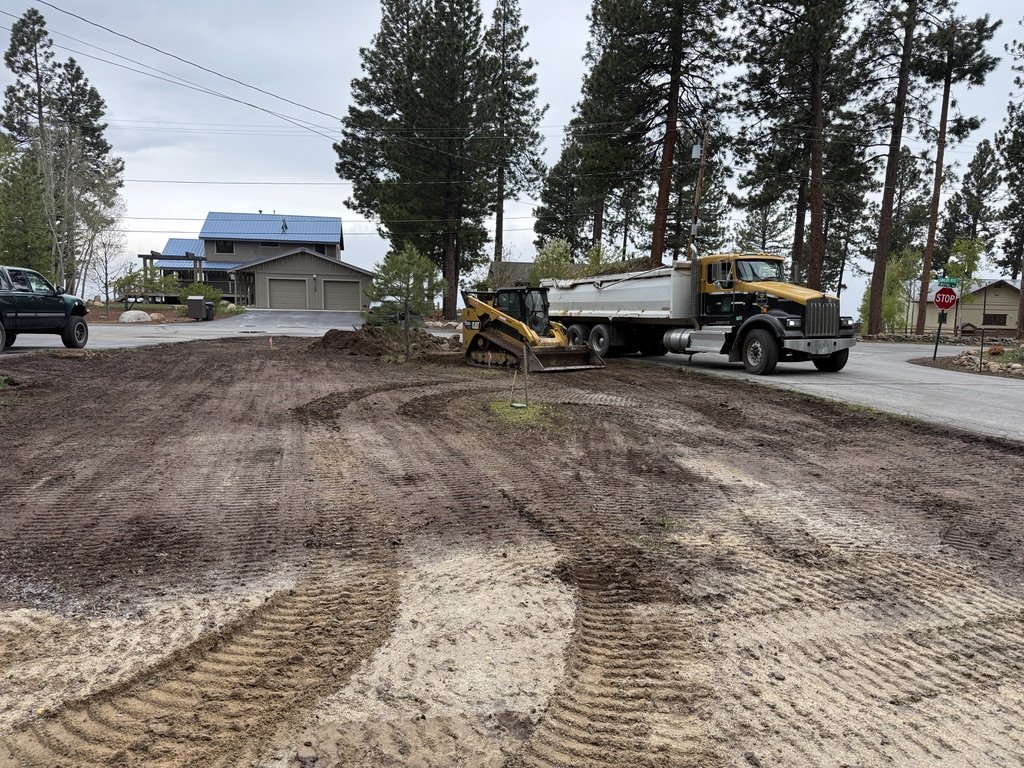
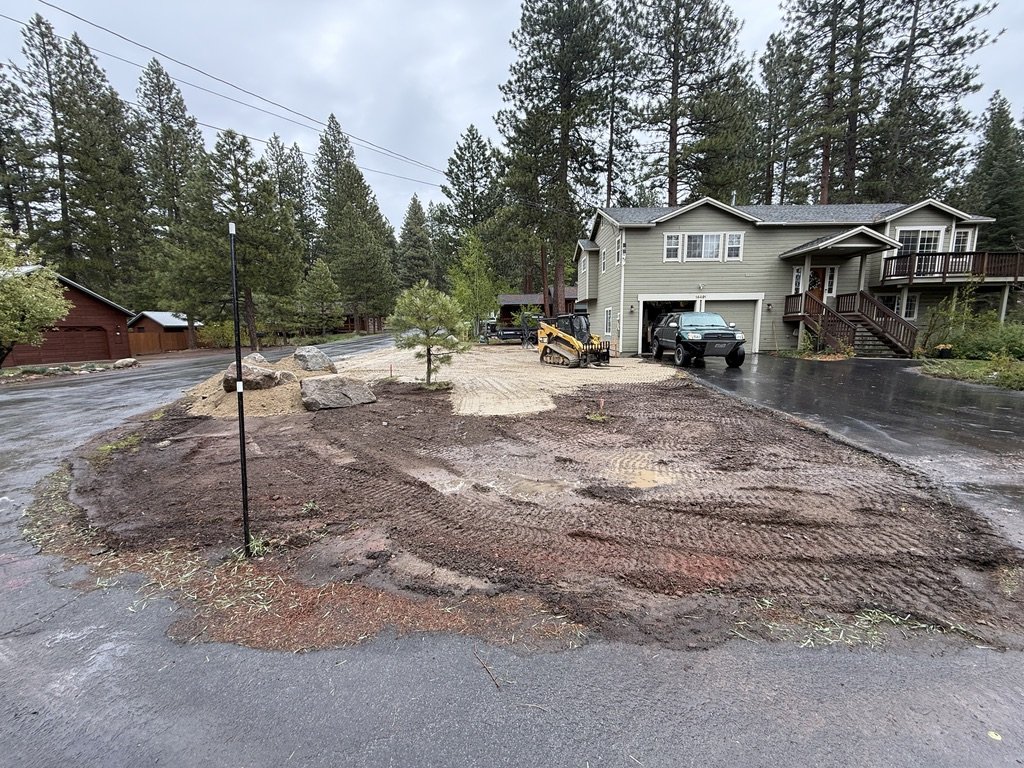
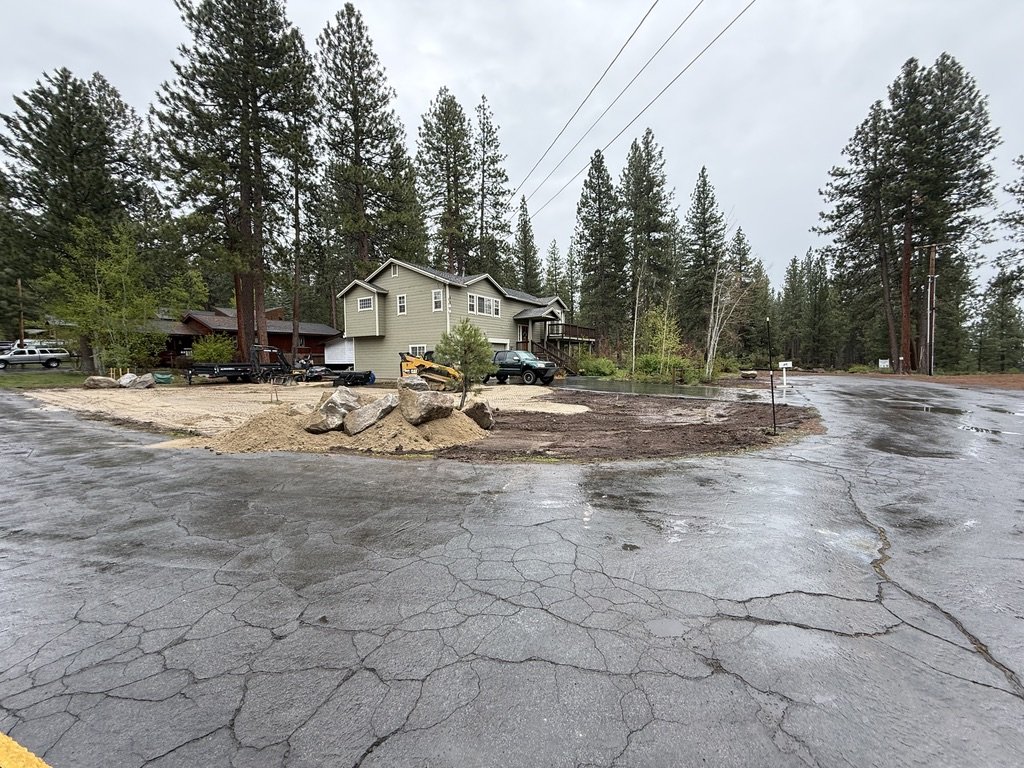
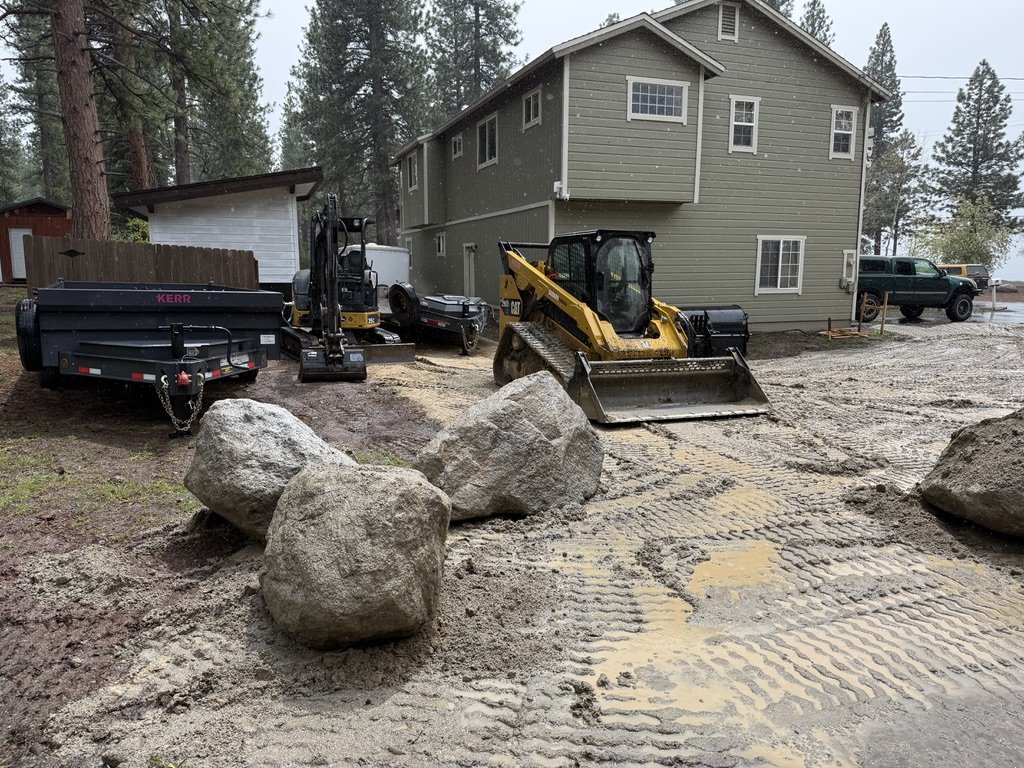
Sierra granite boulders — 4 to 8 tons each — arrive on flatbeds. Set with the CAT's grapple bucket. The art is in the orientation. Each boulder has one face that reads as the natural face — moss patina, weathering pattern, the way it was sitting when it came out of the ground. Get the face right and the wall looks like it's been there a hundred years. Get it wrong and it looks like a pile of rocks.
Walk around each boulder before setting. Rotate, photograph from the viewing angle, set tentative, step back, adjust. Then set permanent on bedding sand + drainage stone. The boulders below grade tie into the ones above; the stack reads as a continuous outcrop, not stacked retainer blocks.
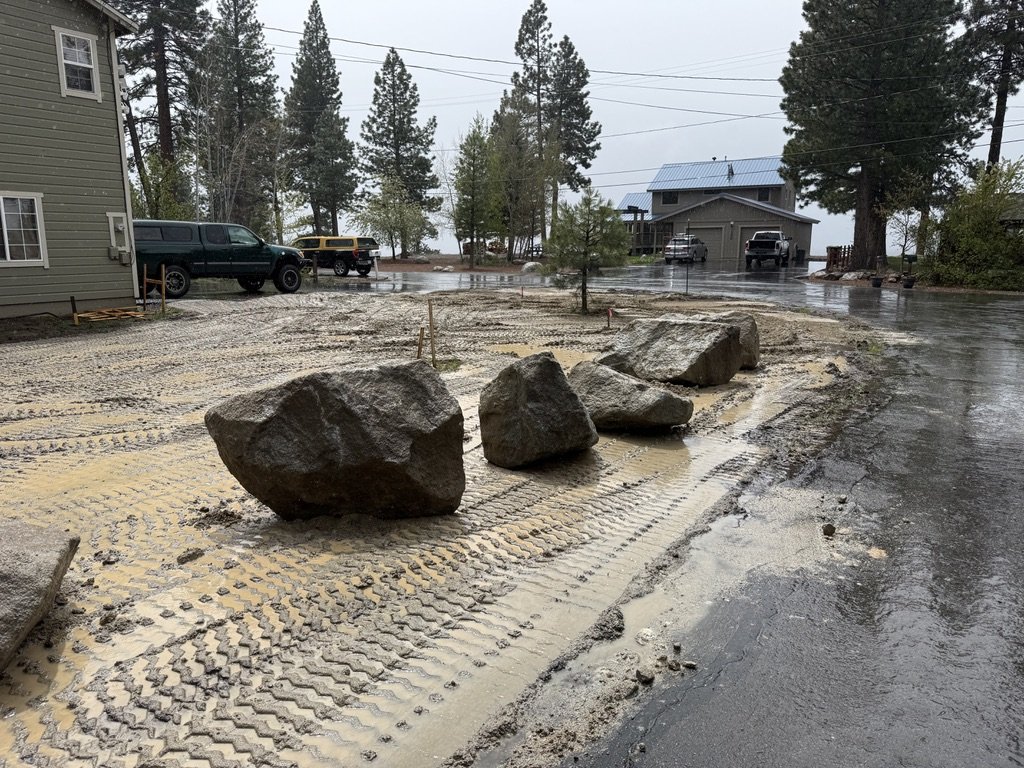
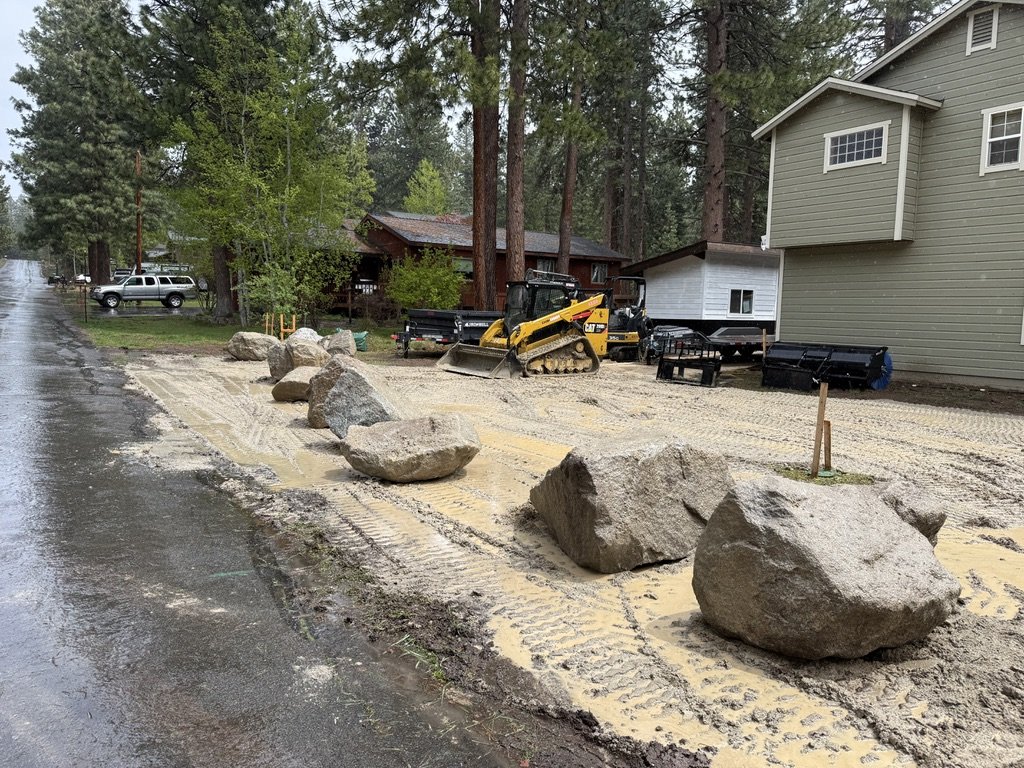
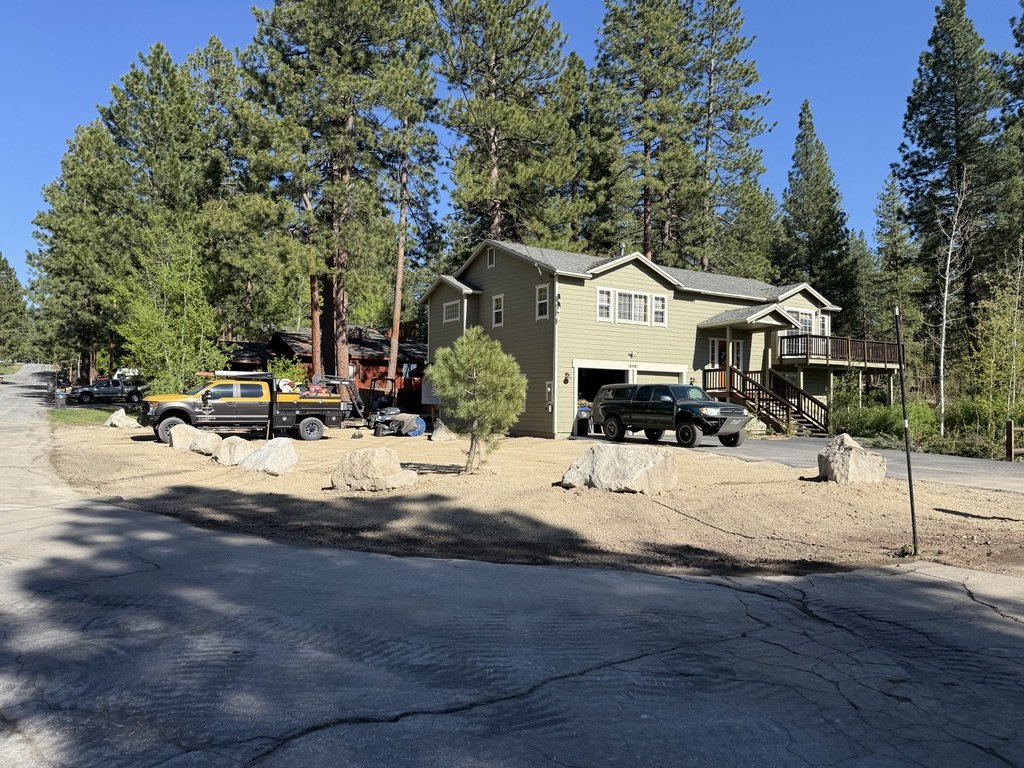
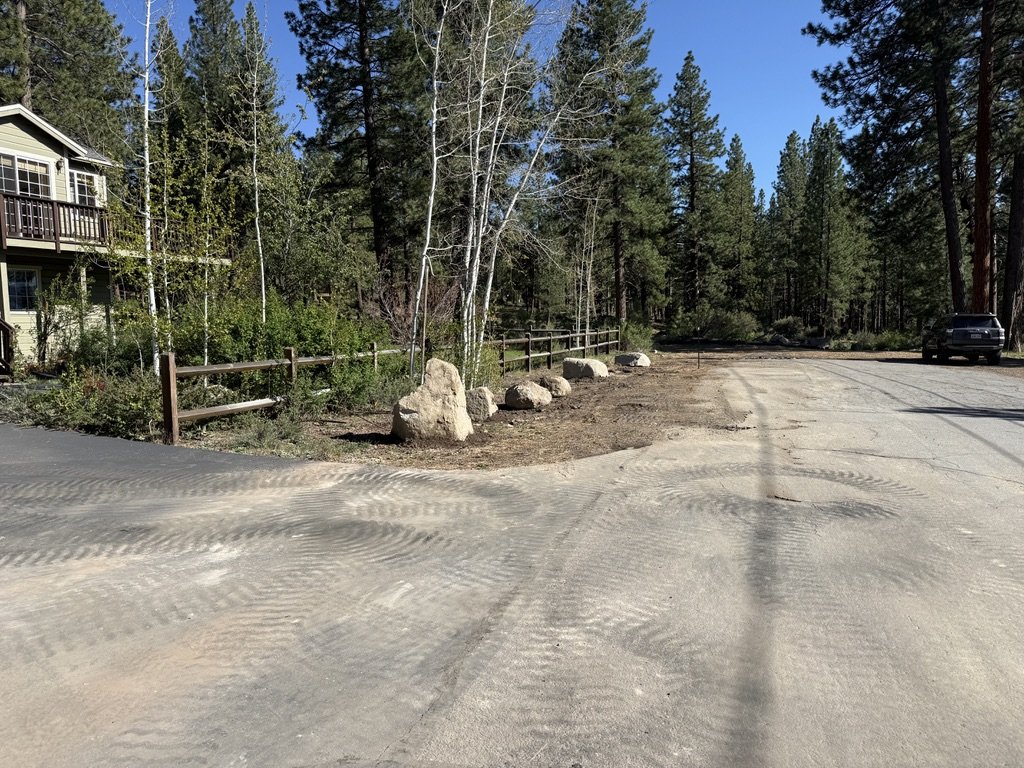
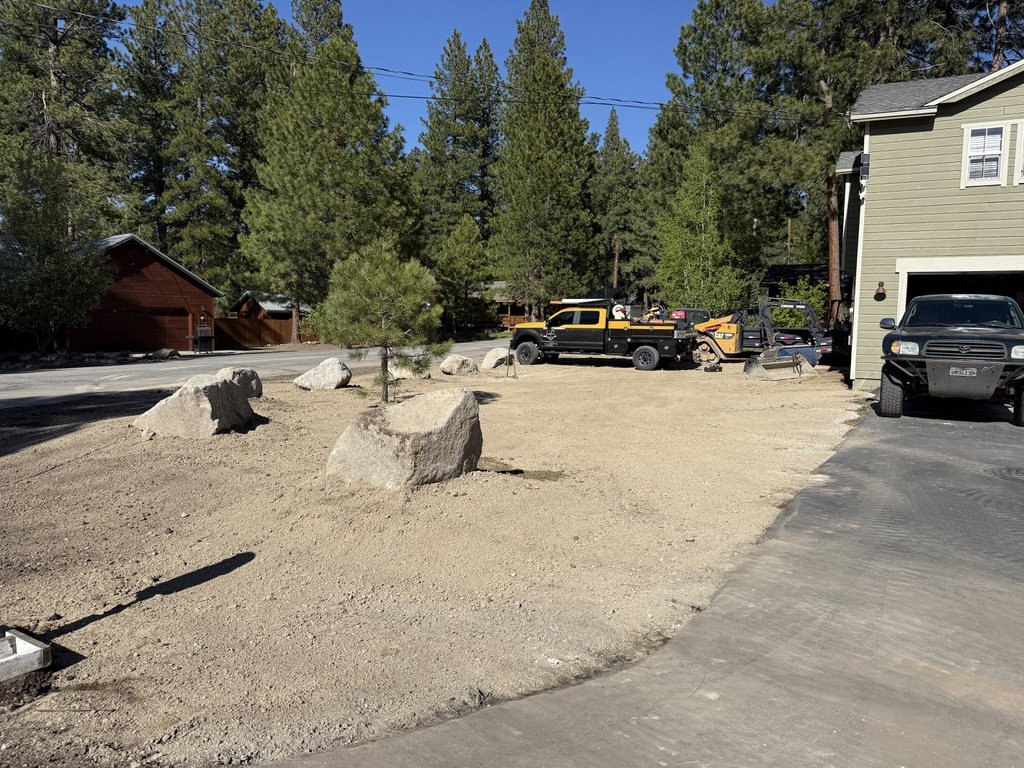
Boulders are in. Now the grading job. 1.5% slope away from the house, every direction. Water never flows toward the foundation. Pathways cut between boulders so a person can walk through the feature without crossing the grade. Drainage gravel laid in the low spots. 4" perforated drain pipe + #57 stone in the trench against the foundation wall.
Tracked-out paths smoothed with the rake bucket. Final scarification of the surface so the eventual top dress (decomposed granite or mulch) ties in without seams.
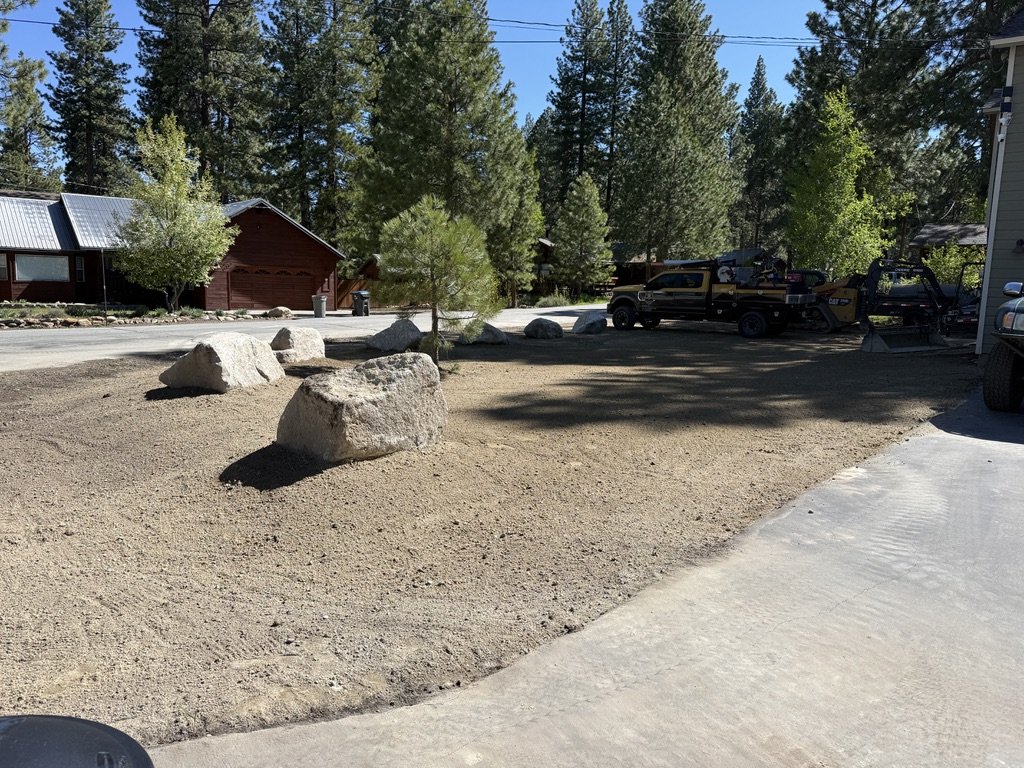
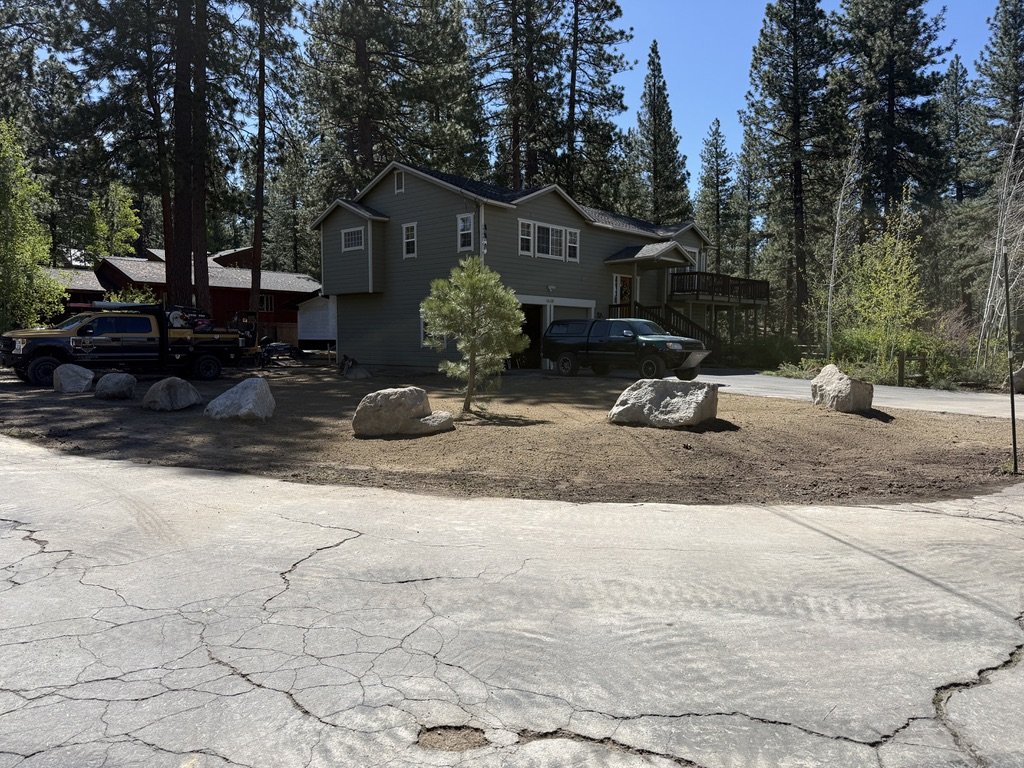
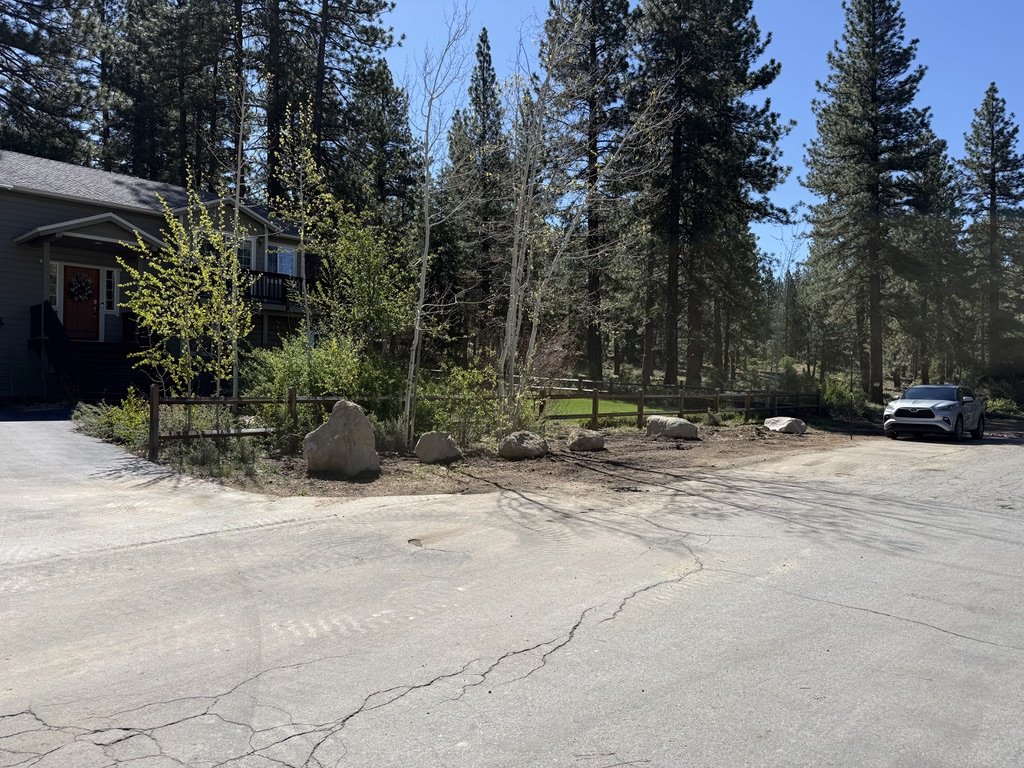
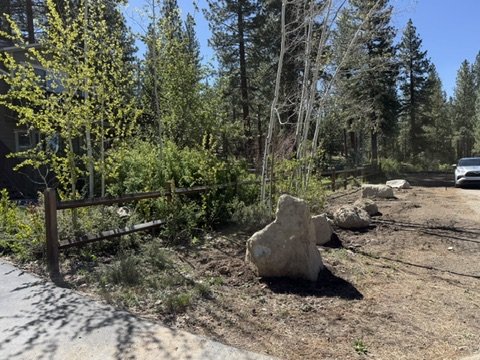
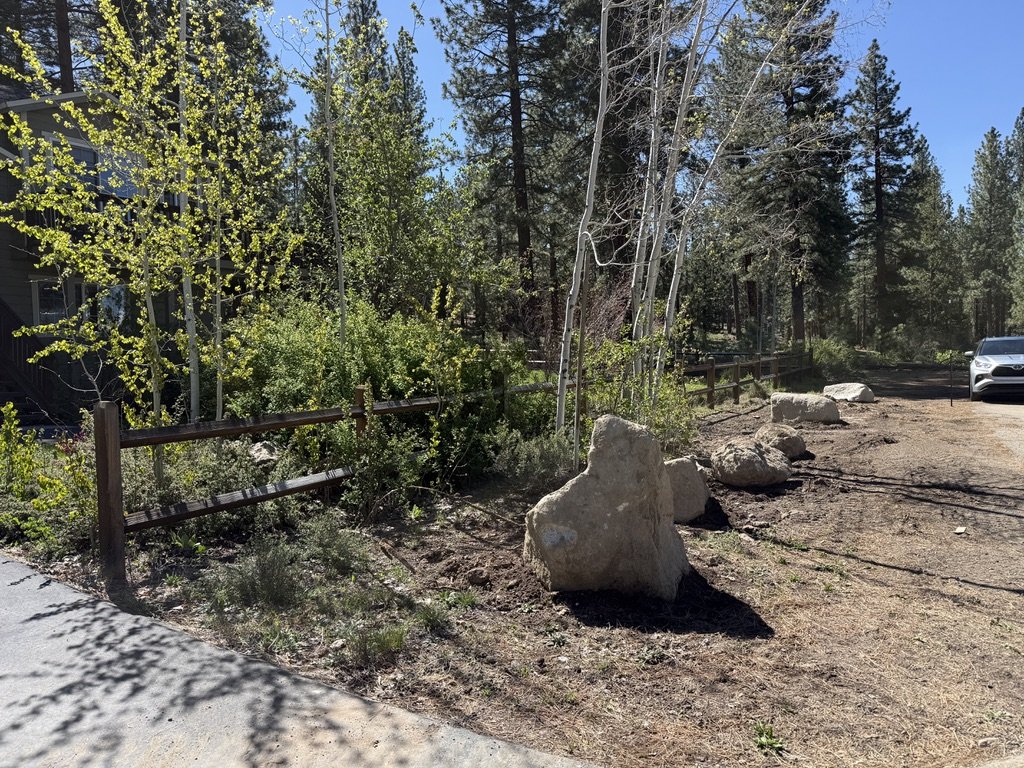
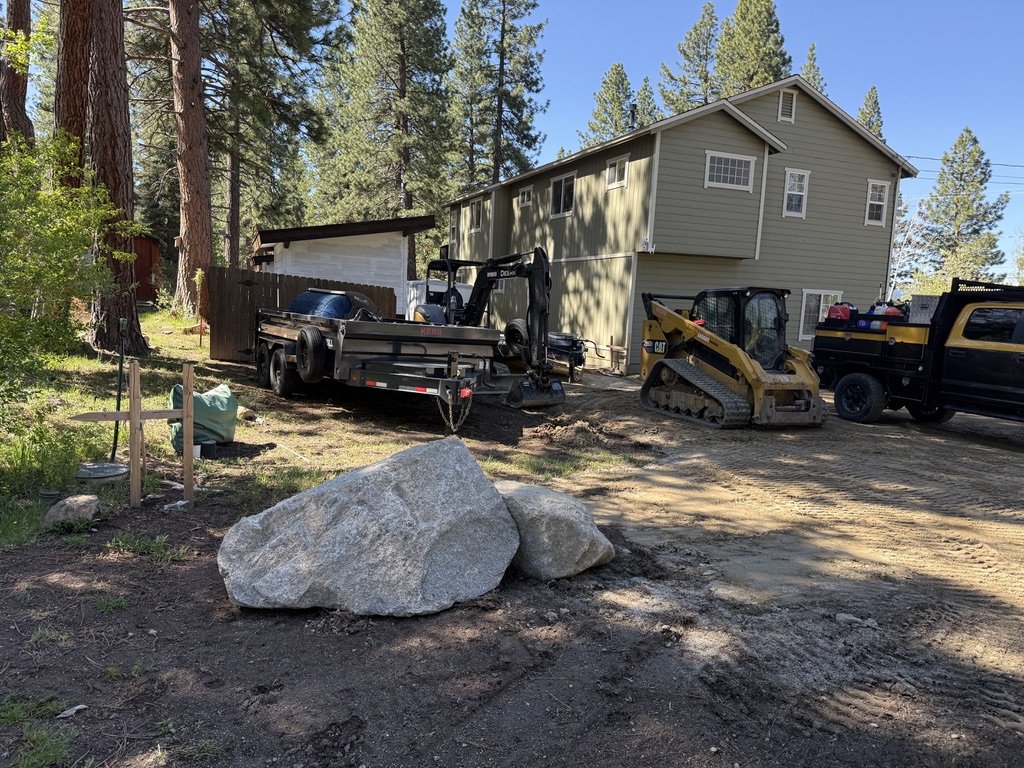
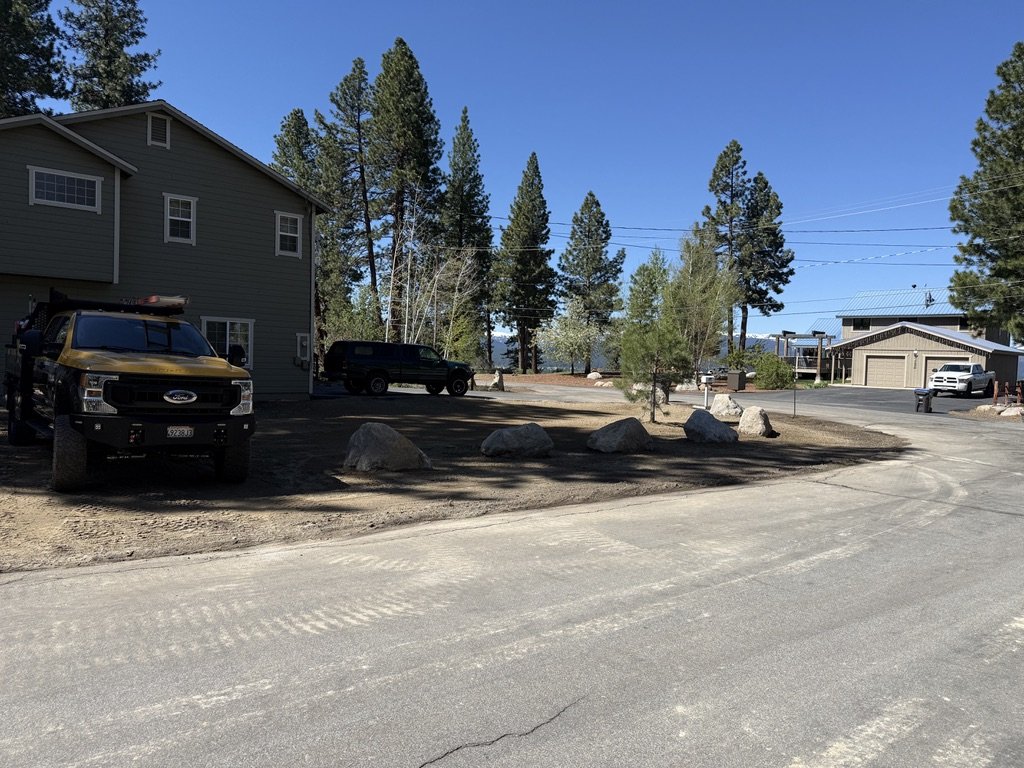
Boulders settled. Paths cut. House revealed. The job is done when it looks like nature did it. The drainage you can't see does its work. The grade you can't see directs water exactly where it needs to go. The boulder feature you can see looks like it's been there a century. Six working days. CAT 299 back on the trailer. Site cleaned. Customer walks the property and the side yard is no longer the part of the house they apologize for.
Materials + equipment for a 6-day residential boulder retaining + drainage grade
| Item | Detail | Qty | Notes |
|---|---|---|---|
| Equipment (E Kerr LLC rental) | |||
| CAT 299D XHP compact track loader | Operated with grapple bucket + rake bucket | 1 | Pivot work + finish grading |
| 16′ dump trailer | Spoil hauling + boulder staging | 1 | 2 trips for excavation spoil |
| Skid Pro grapple bucket attachment | For setting 4–8 ton boulders | 1 | Critical for face-orientation work |
| Skid Pro rake bucket | For finish grading + path cutting | 1 | 1.5% slope setting |
| Stone | |||
| Sierra granite boulders | Locally quarried, mossy face preferred | ~12 tons | 4–8 tons each, 6–8 stones total |
| #57 drainage stone | Crushed rock for bedding + drain trench | ~4 yards | 3″–1.5″ angular |
| Bedding sand | Coarse, well-draining | ~2 yards | Boulder bedding layer |
| Decomposed granite top dress | Path surfacing | ~3 yards | 3/8″ minus, color matches |
| Drainage | |||
| 4″ perforated drain pipe | Foundation-side trench | ~40 ft | Sloped 1.5% to daylight |
| Drain fabric | Wrap perf pipe + stone | 1 roll | Mirafi 140N or equivalent |
(1) Compacting the subgrade before laying drainage stone. (2) Walking around each boulder before setting to find the natural face. Both add ~30 minutes to a 6-day job. Both are the difference between work that holds for 5 years and work that holds for 50.
Bulk landscape material (boulders, DG, drainage stone) comes from the local quarry — everything else linked below. Plus the foreman's hand tools that finish the job after the iron leaves. As an Amazon Associate, Errol earns from qualifying purchases.
Foundation-side French drain. Sloped 1.5% to daylight. Slotted top + bottom, wrapped in fabric so silt doesn't clog the perforations.
Shop on Amazon →Wraps the perforated pipe + #57 stone burrito. Lets water through, keeps fines out. The fabric that decides whether the drain still drains in year 10.
Shop on Amazon →Choker around the boulder, hook to the grapple bucket. Synthetic web doesn't scar mossy faces the way chain does. Rated above the boulder weight by 2×.
Shop on Amazon →Shoots the 1.5% drainage slope from foundation to daylight. The tool that turns "looks about right" into "drains every time."
Shop on Amazon →Subgrade compaction before stone goes down. The step everyone skips. The one that decides whether boulders settle or stay put.
Shop on Amazon →Finish-grade decomposed granite paths by hand after the rake bucket gets it close. The tool that takes a 90%-finished grade to 100%.
Shop on Amazon →Cleans the trench corners the bucket can't reach. Deep narrow blade. The hand tool that finishes what the CAT 299 starts.
Shop on Amazon →Marks utility locates before the dig + the boulder footprints before setting. Inverted nozzle so you don't have to bend over. Fades in 30-60 days.
Shop on Amazon →All 21 photos from the six-day build, in EXIF order. Click any to enlarge.
Photos are hosted on Cloudflare Pages. Full-resolution originals are mirrored to Google Drive at ~/My Drive/06-Website/DIY/side-yard/.
E Kerr LLC + Ruppert Inc. operate the CAT 299 + JD 35G + dump trailer on residential jobs across the Truckee + Tahoe basin. Drainage, retaining walls, finish grading, boulder placement, hardscape — same equipment, same crew, same standard as commercial sites. This work happens on Saturdays + evenings, year-round.
Equipment + Rates